BLOG
Road Safety Rules for Students: Walking, Cycling, Buses
Most road safety lessons stop at look both ways before crossing. That covers one situation out of the five or six a school student actually faces in a week: walking to a bus stop on a road with no footpath, cycling along a service road, sitting pillion on a scooter, getting off a school bus, and crossing a junction where the signal is on blink mode.
Each of those has its own rule, and several of them are now written into law rather than left to judgement. What follows is organised by situation, with the legal requirements marked where they exist. Ministry of Road Transport and Highways data puts annual road deaths in India above 1.5 lakh, and a significant share involves pedestrians and two wheeler riders, which is exactly the group school students belong to.
Rules for Walking and Crossing
On the Footpath and the Road Edge
Use the footpath wherever one exists, even if the road looks empty. Where there is no footpath, walk on the right side of the road so that oncoming traffic is in front of you and you can see it. This is the opposite of the side vehicles drive on, and it is the single rule students most often get backwards.
- Walk in single file on a narrow road rather than side by side
- Keep phones and earphones away while walking near traffic
- Wear light coloured clothing or a reflective strip on the school bag after dusk
- Do not step off the kerb to overtake a slow group of people
Crossing Safely
Cross at a zebra crossing, a foot overbridge or a subway wherever one is available, even if it means walking an extra hundred metres. At a zebra crossing on an unsignalled road, a pedestrian has right of way, but right of way is not the same as safety. Wait until vehicles have actually slowed before stepping out.
Where there is no crossing, stop at the kerb, look right, then left, then right again, because traffic in India comes from the right first. Cross at a steady walk rather than running, and never cross from between two parked vehicles, where a driver cannot see you until you are already in the road. This is the rule that classroom sessions in schools in Bangalore tend to emphasise most, because parked vehicle blind spots account for a large share of pedestrian collisions involving children.
Rules for Cycling to School
A bicycle is a vehicle in law, which means the rider follows traffic rules like any other road user.
- Ride on the left, close to the edge, in the same direction as traffic
- Use hand signals before turning or stopping, and check behind before changing line
- Fit a front reflector, a rear reflector and a working bell; add a light for early morning or evening rides
- Wear a helmet even though it is not legally mandatory for cyclists in most Indian cities
- Never ride two on a single cycle, and never hold on to a moving vehicle for a tow
- Dismount and walk the cycle across a busy junction rather than riding through it
Cycle brakes need checking weekly, not annually. A cable that has stretched over a term will feel normal day to day and then fail on the one downhill stretch where it matters. Several of the best schools in Bangalore now run a cycle inspection at the gate each term, checking brakes, reflectors and tyre pressure before allowing a student to park inside.
School Bus and Van Safety
The riskiest moments in a bus journey are the boarding and alighting, not the travel. Most bus-related injuries to school students happen within three metres of the vehicle.
- Wait on the footpath or the verge, not on the road, and stand back until the bus has come to a complete stop
- Board in a line without pushing; the bus will not leave without you
- Stay seated while the bus is moving and keep arms, heads and bags inside the window
- After getting down, cross in front of the bus where the driver can see you, never behind it
- If something falls under the bus, tell the driver rather than reaching for it
Buses used by gurukul schools in Bangalore and other CBSE campuses are required to carry a first aid kit, a fire extinguisher, a speed governor, a GPS unit and a female attendant where girl students travel, under Karnataka transport rules and Supreme Court directions on school transport. Parents can ask to see these at the start of the year.
Riding Pillion on a Two Wheeler
The rules here changed recently and many families are still working from the old ones. Under amendments to the Central Motor Vehicles Rules that took effect in 2023, a child aged nine months to four years riding pillion must wear a crash helmet or a bicycle helmet that meets the prescribed standard, and must be secured to the rider with a safety harness. The two wheeler must not exceed 40 kilometres per hour while carrying such a child.
- Children above four years wear a standard ISI marked helmet, the same as any pillion rider
- Only one pillion passenger is permitted on a two wheeler
- Both feet should rest on the footrests; a child whose feet do not reach them is not safely seated
- Hold the grab rail or the rider’s waist, not a bag or a loose garment
- Wear closed shoes rather than slippers, since exhaust burns to the ankle are among the most common two wheeler injuries to children
Traffic Signs and Signals Students Should Recognise
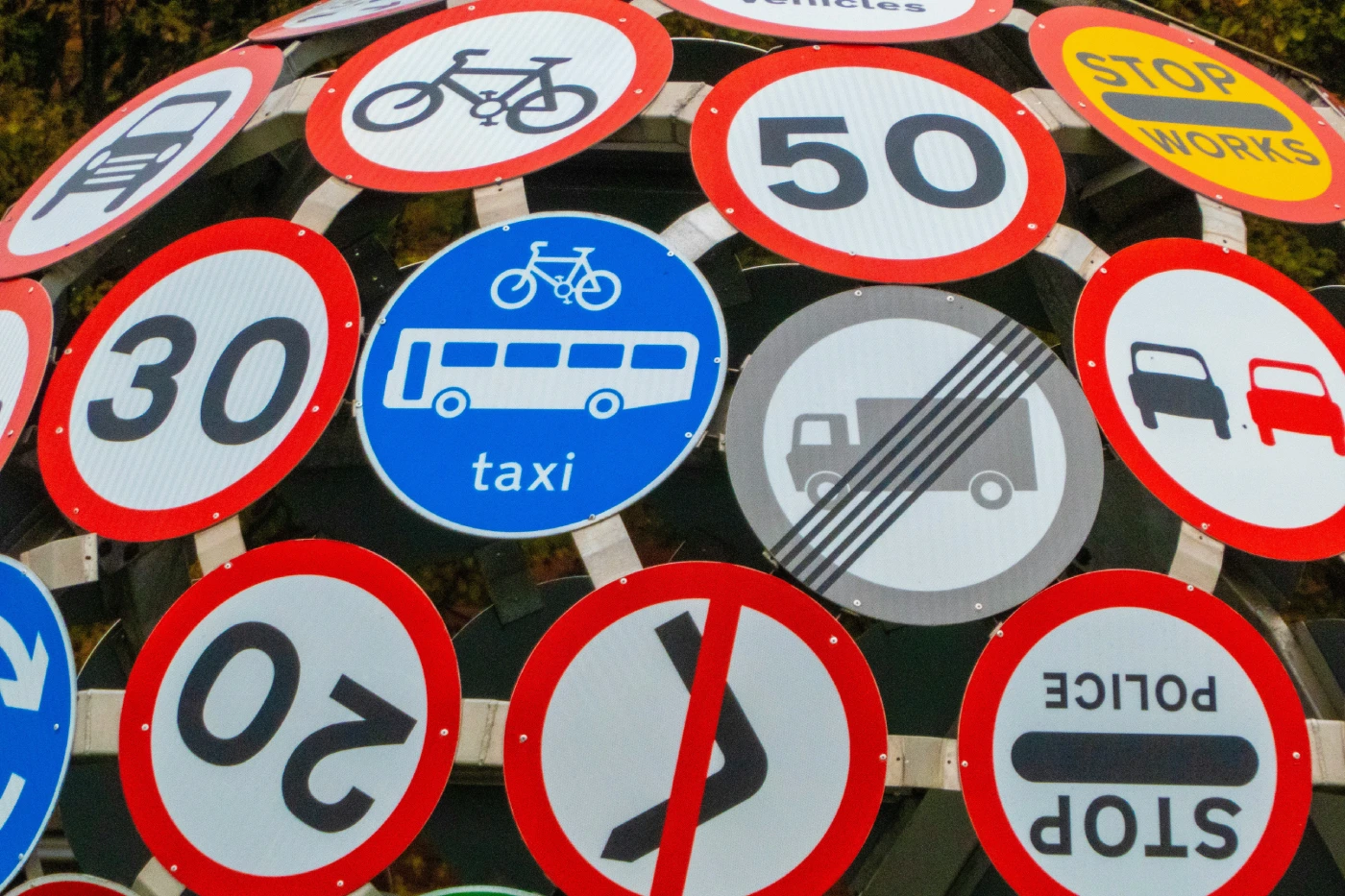
Indian road signs fall into three groups, and the shape tells you the group before you read the symbol.
|
Type of sign |
Shape and colour |
What it means and examples |
|---|---|---|
|
Mandatory |
Circular, red border, white ground |
Must be obeyed. Stop, No Entry, One Way, Speed Limit |
|
Cautionary |
Triangular, red border, white ground |
Warns of a hazard ahead. School Ahead, Narrow Bridge, Slippery Road |
|
Informatory |
Rectangular, blue ground |
Gives information. Hospital, Parking, Petrol Pump, Pedestrian Crossing |
Signal lights carry one rule that students frequently misread. A green light for vehicles does not automatically mean pedestrians may cross; pedestrians follow the separate walk signal where one exists. A blinking amber means proceed with caution and gives no right of way to anyone, which makes an unsupervised blinking junction more dangerous than a red light, not less.
What to Do After a Collision or Near Miss
Students should know the response, not just the prevention.
- Call 112, the single national emergency number, or 108 for an ambulance in Karnataka
- Do not move an injured person unless they are in the path of traffic
- Note the vehicle registration number if it is safe to do so
- Inform a parent and the class teacher the same day, even after a minor fall
Helping a road accident victim carries legal protection in India. The Good Samaritan provisions under the Motor Vehicles Act shield a bystander who assists an injured person from being compelled to give personal details or repeatedly attend court. Students old enough to be out alone should know this, because the fear of involvement is what stops people from helping.
Key Takeaways
- Walk on the right side of the road when there is no footpath, so traffic approaches from the front.
- Look right, then left, then right again, and never cross from between parked vehicles.
- Cyclists ride on the left, use hand signals and check brakes weekly.
- Always cross in front of a school bus, never behind it.
- Children aged nine months to four years need a helmet and harness on a two wheeler, with a 40 kmph speed cap.
- Sign shape identifies its type: circle for mandatory, triangle for warning, rectangle for information.
Conclusion
Road safety works as habit rather than knowledge. A student who has been taught to stop at the kerb every single time, including on an empty residential lane, will stop on the one morning a speeding vehicle comes round the corner. The top schools in Bangalore build this through repetition on real routes, walking students to the gate, timing the crossings, checking helmets at the two wheeler drop-off, rather than through a single annual assembly on the subject.
Frequently Asked Questions
Which side of the road should a student walk on?
Use the footpath if there is one. Where there is none, walk on the right side facing oncoming traffic so that approaching vehicles are visible.
Is a helmet compulsory for children on a two wheeler in India?
Yes. Children aged nine months to four years must wear a crash helmet or a prescribed bicycle helmet and be secured with a safety harness, and riders carrying them must stay within 40 kilometres per hour. Above four years, standard helmet rules apply.
Why should students cross in front of a school bus and not behind it?
The driver can see a student walking in front of the bus. Behind it, the student is in a blind spot and also hidden from traffic overtaking the stationary bus.
What do the three shapes of road signs mean?
Circular signs are mandatory and must be obeyed. Triangular signs warn of a hazard ahead. Rectangular blue signs give information such as parking or a hospital.
What number should be called after a road accident?
112 is the single national emergency number. In Karnataka, 108 reaches an ambulance directly.
Do pedestrians have right of way at a zebra crossing?
Yes on an unsignalled road. Waiting until vehicles have visibly slowed is still necessary, since right of way does not stop a vehicle.
At what age can a student cycle to school alone?
There is no fixed legal age for cycling. Judgement matters more than age: a student should be able to read traffic, use hand signals and handle a junction confidently before riding unaccompanied on any road with motorised traffic.